Nível tecnológico e seus determinantes na apicultura cearense
Palavras-chave:
apicultores fixos e migratórios, microrregião do Cariri, regressão quantílica, tecnologiasResumo
Este estudo objetiva mensurar o nível tecnológico dos apicultores na microrregião do Cariri e identificar os fatores que influenciam o nível tecnológico desses apicultores. Para determinar o nível tecnológico, foram consideradas as tecnologias de equipamentos, manejo, colheita, pós-colheita e gestão, tendo-se obtido um índice para cada uma dessas tecnologias, assim como um índice tecnológico geral, que agregou todas essas técnicas. Utilizou-se também o método de regressão quantílica para verificar os determinantes do nível tecnológico. Os dados foram provenientes de fontes primárias. Foram coletados em 2010 diretamente com 80 apicultores na microrregião do Cariri. Os resultados mostraram que as tecnologias recomendadas de manejo, colheita e pós-colheita estão sendo mais utilizadas pelos apicultores migratórios do que pelos fixos. Em termos médios, verifica-se que a tecnologia de gestão foi classificada como baixa, e as outras tecnologias apresentaram nível intermediário tanto para os apicultores fixos quanto para os migratórios. Ademais, pode-se inferir pelo modelo de regressões quantílicas que as variáveis escolaridade, quantidade de colmeias, crédito, atividade principal, anos de experiência e modalidade de manejo são relevantes na explicação das diferenças tecnológicas; porém, atividades cooperativas e o acesso à assistência técnica não representam fatores importantes para explicar os níveis tecnológicos dos apicultores.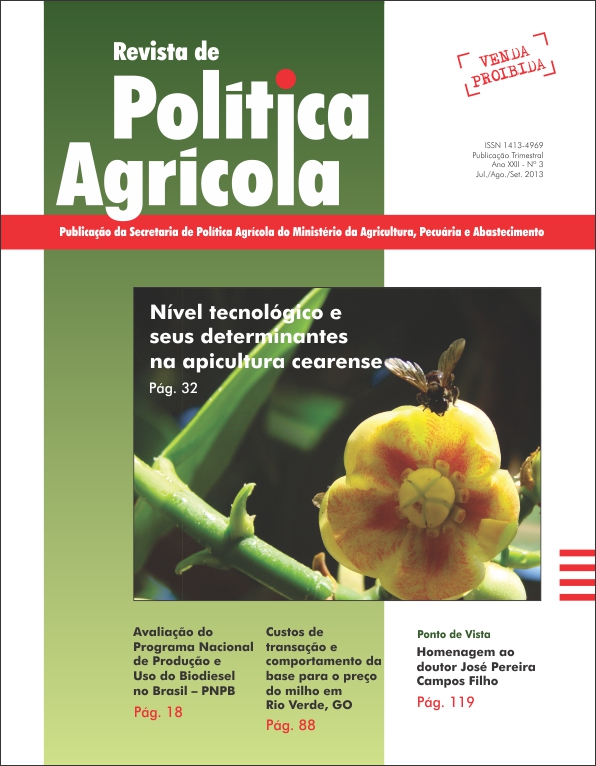
Downloads
Como Citar
Barbosa, W. de F., & Sousa, E. P. de. (2015). Nível tecnológico e seus determinantes na apicultura cearense. Revista De Política Agrícola, 22(3), 32–47. Recuperado de https://rpa.sede.embrapa.br/RPA/article/view/764
Edição
Seção
Artigo Científico